

Last updated:
TL;DR:
- Flooring lifespan varies widely by material, from five years for carpet to over 100 years for tile or hardwood. Factors such as installation quality, moisture management, and maintenance significantly influence the actual durability of a floor over time. Most homeowners replace floors based on appearance or style changes rather than structural failure.
When you’re planning a renovation or weighing up a flooring upgrade, understanding what is flooring life expectancy for different materials is one of the most practical things you can do before spending a cent. The answer, frustratingly, is never a single number. Two identical floors installed on the same day can age at completely different rates depending on how they’re installed, maintained, and used. This guide cuts through the confusion by breaking down realistic lifespan ranges for every major flooring type, explaining the factors that actually drive longevity, and giving you a clear framework for matching durability to your home, lifestyle, and budget.
Table of Contents
- Key takeaways
- What is flooring life expectancy by material type
- What actually determines how long floors last
- Structural life versus visual life
- Choosing flooring based on how long you plan to stay
- Quick comparison: durability of flooring types at a glance
- My honest take on flooring lifespan advice
- Ready to choose flooring that lasts?
- FAQ
Key takeaways
| Point | Details |
|---|---|
| Lifespan varies widely by material | Flooring lifespan ranges from 5 years for budget carpet to over 100 years for porcelain tile or solid hardwood. |
| Wear layer matters more than total thickness | For vinyl, the wear layer thickness is the single best predictor of how long it will hold up under daily use. |
| Installation quality shapes outcomes | Poor substrate preparation and unmanaged moisture can cut a floor’s expected lifespan in half before it shows a single scratch. |
| Structural and visual lifespans differ | A floor can still function perfectly while looking tired, and most homeowners replace on appearance, not failure. |
| Match flooring to your tenure and lifestyle | Short-term owners, high-traffic households, and rental properties each have different flooring ROI calculations. |
What is flooring life expectancy by material type
Flooring life expectancy, known in the industry as service life, refers to the period a floor can perform its intended function before requiring replacement or major restoration. The range across materials is enormous, which is exactly why renovation decisions made without this knowledge often result in buyers either overspending on longevity they don’t need or underspending on floors that wear out too soon.
Here is a straightforward breakdown of average life of flooring by material:
| Flooring type | Typical lifespan | Notes |
|---|---|---|
| Porcelain tile | 50 to 100+ years | Longest lasting option, outlasts the home itself if maintained |
| Natural stone | 50 to 100+ years | Requires sealing; very long structural life |
| Solid hardwood | 75 to 100+ years | Refinishable 3 to 5 times, extending life significantly |
| Engineered hardwood | 20 to 40 years | Top layer thickness determines refinishing potential |
| Laminate | 15 to 25 years | Higher quality products exceed 30 years with proper care |
| Luxury vinyl plank (LVP) | 10 to 25 years | Wear layer thickness is the key variable |
| Sheet vinyl | 10 to 20 years | Budget options closer to 10 years |
| Carpet | 5 to 15 years | Traffic and pets accelerate wear significantly |
What stands out immediately is the gap between hard and soft surfaces. Tile and stone are essentially permanent fixtures in a home. Solid hardwood, with its refinishing potential, crosses into generational territory. Carpet sits at the other end entirely. These are not arbitrary numbers. They reflect real-world performance data across different material compositions and usage contexts.
What actually determines how long floors last
The flooring lifespan figures above assume reasonable conditions. In reality, two homes with the same laminate flooring installed on the same day can end up with wildly different outcomes at the 10-year mark. Here is what separates the floors that age well from the ones that don’t.
Wear layer thickness for vinyl and laminate
For luxury vinyl plank and laminate, the wear layer is everything. Premium vinyl with a 20-mil wear layer can last 15 to 25 years, while budget options with a 6 to 12-mil layer may start showing damage in five to ten. For laminate, the AC rating system tells a similar story. AC1-rated laminate lasts around 10 years, while AC3 to AC5-rated boards perform for 15 to 25-plus years depending on traffic levels.
Moisture management
This is where flooring lifespan decisions become structural, not cosmetic. Slab relative humidity above 75 to 80 per cent causes adhesive failure and delamination over time if not addressed before installation. Bathrooms, laundries, and below-grade spaces require specific moisture-tolerant materials. Installing hardwood or laminate in a moisture-prone area without proper mitigation is one of the fastest ways to shorten floor life dramatically.
Installation quality
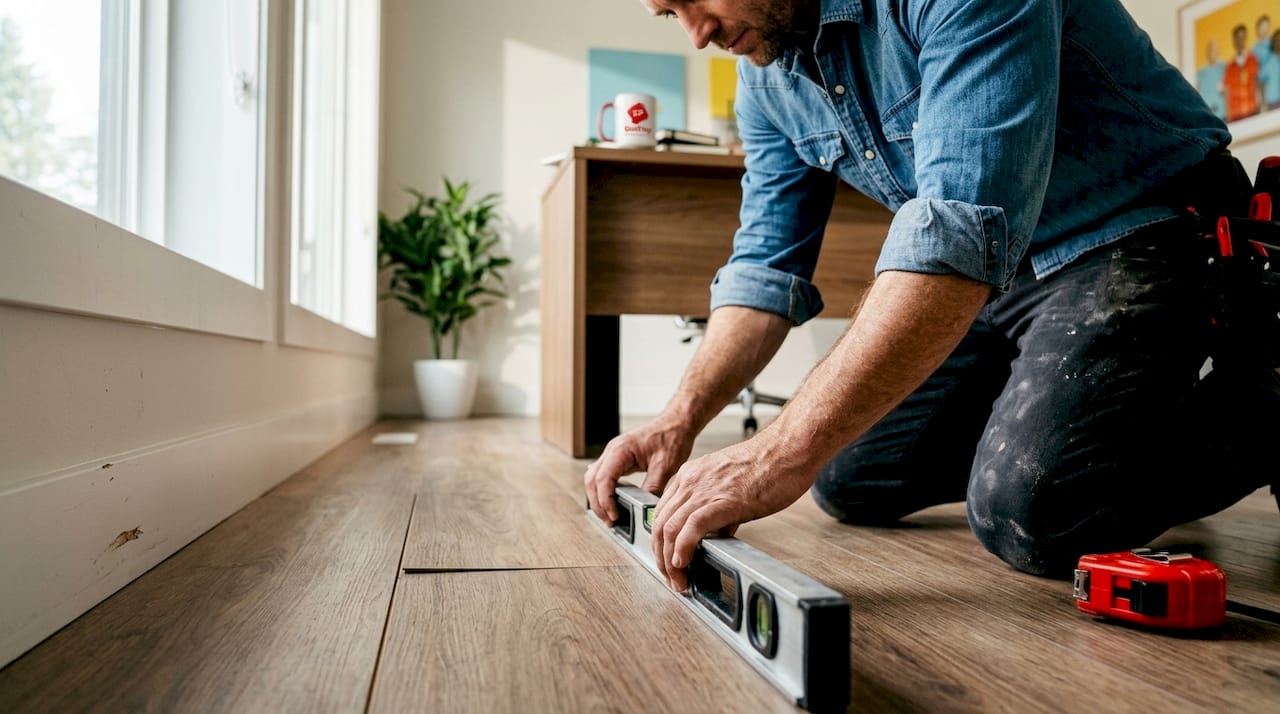
Even the best flooring material performs poorly on a poorly prepared substrate. Uneven subfloors cause joint stress in laminate and LVP. Insufficient acclimatisation causes solid hardwood to expand and buckle. These are not product failures. They are installation failures, and they typically void warranties too.
Traffic, pets, and lifestyle
A household with dogs, children, and high foot traffic between the front door and kitchen places entirely different demands on flooring than a single-person apartment. Scratching from claws, grit tracked in from outside, and concentrated wear paths all accelerate surface degradation. This is why matching flooring to site conditions matters as much as material selection itself.
Maintenance habits
The difference between a vinyl floor that lasts 10 years and one that lasts 20 often comes down to how it is cleaned. Felt pads on furniture legs and avoiding harsh chemical cleaners protect the wear layer and preserve surface finish far longer than replacing floors on a fixed schedule.
Pro Tip: Use a damp mop rather than a wet one on any floating floor system. Standing water that seeps into joins is one of the most common causes of premature failure in laminate and LVP, regardless of wear layer quality.
Structural life versus visual life
This is a distinction most renovation guides skip entirely, and it is one of the most useful frames for making sound flooring decisions.
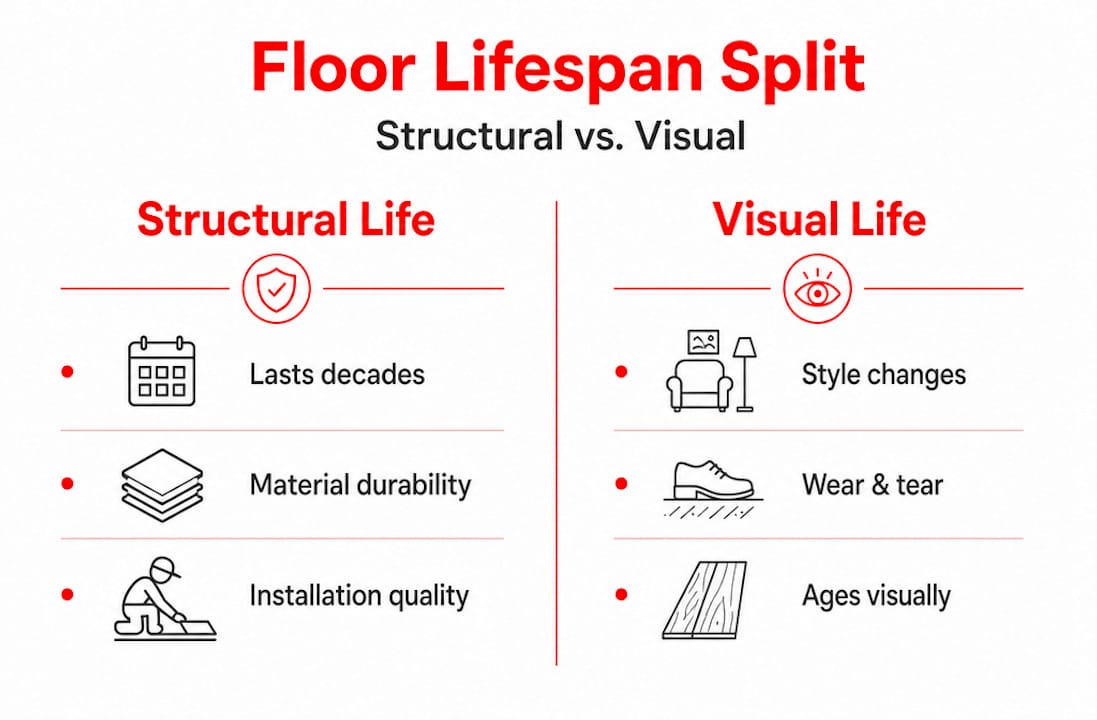
Structural life refers to how long a floor maintains physical integrity. It can still be walked on, it doesn’t flex or creak dangerously, and it hasn’t delaminated or cracked. Visual life refers to how long a floor looks good enough that you don’t want to replace it. Floors can function structurally even when heavily scratched, faded, or dented. Yet in practice, most homeowners replace floors well before structural failure ever occurs.
The triggers for visual replacement include:
- Heavy surface scratching that dulls the sheen and catches the eye from across the room
- Sun-fade discolouration, particularly on lighter-coloured timber and laminate near north-facing windows
- Grout discolouration in tiled areas that no longer responds to cleaning
- Style changes where the floor no longer matches updated cabinetry, wall colours, or furniture
- Carpet that has flattened, stained, or developed odours that persist despite professional cleaning
Visual ageing and style obsolescence often drive replacement timing more than any material failure. For property managers, this distinction has financial implications. A structurally sound floor that looks tired lowers rental appeal and perceived value even if it is perfectly safe underfoot. For homeowners planning to sell, it influences buyer psychology directly. Understanding that you can often extend visual life through professional cleaning, re-coating, or refinishing before committing to full replacement saves significant cost. You can also read about durable flooring options that balance both structural and visual longevity over time.
Choosing flooring based on how long you plan to stay
One of the most practical ways to apply flooring lifespan knowledge is to map your flooring choice against your expected tenure in a property. This reframes the entire cost calculation.
-
Short-term stays (under 7 years). Luxury vinyl tile provides better ROI than expensive hardwood for homeowners who won’t be around long enough to extract the full value of a generational floor. It looks excellent, installs quickly, and holds up well for the period it needs to.
-
Medium-term stays (7 to 15 years). Engineered hardwood, quality laminate, or porcelain tile make strong sense here. The upfront cost is justified by a lifespan that comfortably covers your tenure and adds real property value.
-
Long-term ownership or forever homes. Solid hardwood or natural stone is worth the investment. A solid hardwood floor installed today, properly maintained and refinished once or twice over the decades, will still be adding value when the rest of the home has been renovated multiple times.
-
Rental and investment properties. Durability of flooring types that handle heavy tenant use without looking cheap is the goal. Thick LVP with a commercial-grade wear layer often hits the sweet spot between cost, tenant appeal, and low maintenance requirements.
-
High-traffic commercial or mixed-use spaces. Porcelain tile or polished concrete consistently outperforms every soft and semi-hard option in these conditions. The higher installation cost amortises well when you are not replacing the floor every decade.
Pro Tip: If you’re renovating to sell within two years, resist the urge to install premium hardwood for the ROI story. Buyers appreciate it, but the cost difference rarely returns dollar for dollar at resale compared to well-chosen vinyl or tile.
For more on how to match materials to different room functions, the flooring renovation guide from Simplay Projects covers installation and selection in detail.
Quick comparison: durability of flooring types at a glance
| Flooring type | Durability rating | Moisture suitability | Maintenance level | Approx. cost per m² (AUD) |
|---|---|---|---|---|
| Porcelain tile | Very high | Excellent | Low | $40 to $120 |
| Natural stone | Very high | Good (sealed) | Medium | $80 to $200+ |
| Solid hardwood | High | Poor | Medium to high | $80 to $200+ |
| Engineered hardwood | Medium to high | Moderate | Medium | $50 to $150 |
| Laminate | Medium | Poor | Low to medium | $25 to $80 |
| Luxury vinyl plank | Medium to high | Excellent | Low | $30 to $90 |
| Carpet | Low to medium | Poor | Medium | $20 to $80 |
For wet areas like bathrooms and laundries, porcelain tile and LVP dominate because of their moisture resistance. Solid hardwood is genuinely risky in these zones without very careful moisture management. Carpet should not be used in any moisture-prone area if longevity is a priority.
My honest take on flooring lifespan advice
I’ve spent years working with homeowners and property managers in Sydney, and the single biggest mistake I see people make is treating material choice as the whole conversation. Someone will hear that hardwood lasts 100 years and install it in a south-facing room with a moisture issue and a dog that runs laps between the back door and the kitchen. Three years later they’re wondering why it looks like it’s already a decade old.
In my experience, two things matter more than the material itself. First, whether the floor was installed correctly on a properly prepared, moisture-managed substrate. Second, whether the maintenance has been consistent and appropriate. I’ve seen budget laminate outlast premium engineered hardwood in the same home simply because one room had better conditions and better care.
The other thing worth saying plainly: most people replace floors for aesthetic reasons, not because the floor has failed. That’s not irrational. A worn floor affects how a home feels and photographs. But it does mean that the “lifespan” of a floor is partly a lifestyle and design question, not just a materials science one. Knowing that gives you more control. You can extend visual life with the right care products and protective habits, and make the call to replace on your own timeline rather than the floor’s.
Think long-term, but also honestly. If you’ll sell in five years, don’t buy for fifty. Invest in the quality level that matches your actual plan.
— Richie
Ready to choose flooring that lasts?
If this article has clarified your thinking about flooring material longevity, the next step is getting advice that accounts for your specific home, lifestyle, and budget.
Simplay Projects is a Sydney-based renovation and building company with its own licensed flooring team. Whether you’re weighing up which material suits a high-traffic family home or planning a full interior renovation in Sydney, the team can walk you through options that balance durability, aesthetics, and cost. You’re also welcome to visit the Ramsgate showroom to see flooring displays in person before committing to a choice. For larger projects that combine flooring with broader renovations, Simplay Projects also offers home renovation services in Sydney to manage the full scope from start to finish.
FAQ
How long does flooring typically last?
Flooring lifespan varies widely by material. Porcelain tile and natural stone can last over 100 years, solid hardwood 75 to 100-plus years with refinishing, laminate 15 to 25 years, and carpet between 5 and 15 years depending on traffic and care.
What flooring has the longest lifespan?
Porcelain tile and natural stone offer the longest flooring material longevity, often outlasting the building itself. Solid hardwood is close behind, given its ability to be sanded and refinished multiple times over its life.
Does wear layer thickness affect vinyl flooring lifespan?
Yes, significantly. Premium vinyl with a 20-mil wear layer can last 15 to 25 years, while budget products with a 6 to 12-mil layer may only last 5 to 10 years under normal household conditions.
When should I replace flooring versus refinishing it?
If a floor is structurally sound but looks worn, refinishing or re-coating is worth considering before replacement. Solid hardwood can be refinished three to five times. Scratched LVP or laminate, however, cannot be refinished and typically warrants replacement once visually degraded beyond recovery.
What is the best flooring for high-traffic areas?
Porcelain tile and luxury vinyl plank with a thick wear layer perform best in high-traffic areas. Both handle heavy use, resist moisture, and require minimal maintenance relative to their lifespan.
Recommended
- Flooring choices for family homes: durable and stylish
- Flooring Solutions for Your Home Renovation: Expert Advice
- Flooring Guide: Discover the Latest Trends and Styles
- Discover Your Ideal Flooring Solution with Simplay Projects
Make Simplay Projects a preferred source in Google
One click tells Google to surface our articles more often in Top Stories, AI Overviews and AI Mode.