

Last updated:
TL;DR:
- Most renovation budget failures occur before construction begins due to inadequate planning and misinterpreted builder quotes. External factors like material price fluctuations and scope creep further inflate costs, making thorough feasibility studies and contingency planning essential. Proper upfront preparation and professional management can significantly reduce the risk of cost overruns.
Most homeowners assume renovation cost blowouts happen because of nasty surprises hidden inside walls. In reality, the causes of renovation cost overruns are far more predictable. 78% of renovation budgets fail before a single wall comes down, not from bad luck, but from inadequate planning and a fundamental misunderstanding of what a builder’s quote actually represents. Add volatile material prices, a tight labour market, and scope creep to the picture, and it becomes clear why so many projects end up costing far more than expected. This guide unpacks the real reasons budgets unravel and what you can do about it.
Table of Contents
- Key takeaways
- Why renovation costs blow out before work even starts
- Material prices and labour shortages in 2026
- Delays and scope creep: the compounding cost problem
- Strategies to prevent budget blowouts
- My honest take on renovation budget failures
- How Simplay Projects helps you stay on budget
- FAQ
Key takeaways
| Point | Details |
|---|---|
| Planning failures dominate | Most budget blowouts begin before construction starts, rooted in poor feasibility work, not unforeseen site issues. |
| Quotes are not budgets | Builder quotes exclude 15 to 20 cost categories; only a full feasibility study gives you a realistic project cost. |
| Market volatility is real in 2026 | Steel and copper price surges, labour shortages, and supply chain instability are actively pushing construction costs higher. |
| Scope creep costs more than you think | 60% of projects face scope changes that add 10 to 15% to the final cost, often from avoidable communication gaps. |
| Contingency sizing matters | Sydney renovations require a minimum 15 to 20% contingency buffer, rising to 25% or more for older homes. |
Why renovation costs blow out before work even starts
The industry term for what most people call a budget blowout is a “cost overrun.” Understanding why it happens so early is the first step toward preventing it.
The single biggest misconception is treating a builder’s quote as a project budget. Builder quotes are estimates based on incomplete information at the time of pricing. They cover construction labour and materials. They do not cover the other 15 to 20 cost categories that make up the true cost of a renovation project.
What gets left out? The list is longer than most people expect:
- Development application and building permit fees
- Architectural and structural engineering fees
- Council holding costs during approval periods
- Land tax, stamp duty, and conveyancing fees
- Builder’s risk insurance and public liability premiums
- Site preparation and demolition not itemised in the quote
- Temporary accommodation or storage costs
- Interest on construction loans during the build period
- Sales agent fees and marketing costs (for investment properties)
- Goods and Services Tax on materials and labour
Ignoring these elements leads to fundamental miscalculations before construction even begins. Homeowners commit to contracts based on insufficient assumptions, then face costly mid-project variations and re-pricing when reality catches up.
A proper feasibility study, by contrast, calculates the total cost of ownership across all categories. It is not glamorous work, but it is the single most valuable thing you can do before signing anything.
Pro Tip: Before you request any builder quotes, write down every cost category your project will involve beyond construction itself. If your list has fewer than ten items, you are not finished yet.
Material prices and labour shortages in 2026
Even a perfectly planned budget can be undermined by the market conditions surrounding your build. In 2026, those conditions are genuinely challenging.
The Producer Price Index for construction materials rose 1.7% in a single month in early 2026, the largest monthly increase since January 2022. That kind of movement compounds quickly across a project. Steel mill product prices are up 13.3% year over year, while copper wire and cable prices have climbed 11.8% over the same period.
Here is a snapshot of how current market forces are affecting renovation costs:
| Factor | Impact on renovation budgets |
|---|---|
| Steel and copper price surges | Direct cost increases to structural, electrical, and plumbing scopes |
| Labour market tightness | Skilled trades commanding higher rates due to scarcity |
| Supply chain instability | Longer lead times triggering schedule extensions and added overheads |
| Higher borrowing costs | Tighter credit standards reducing budget flexibility and contingency viability |
| Geopolitical factors | Tariffs, fuel prices, and port congestion driving further price instability |
Supply chain volatility in 2026 is less about whether materials are available and more about wild price swings that are difficult to predict even weeks out. When a builder quotes you in January, the price of copper fittings in March may be meaningfully different. Locking in material costs early through procurement agreements is one of the most practical steps you can take on larger projects.
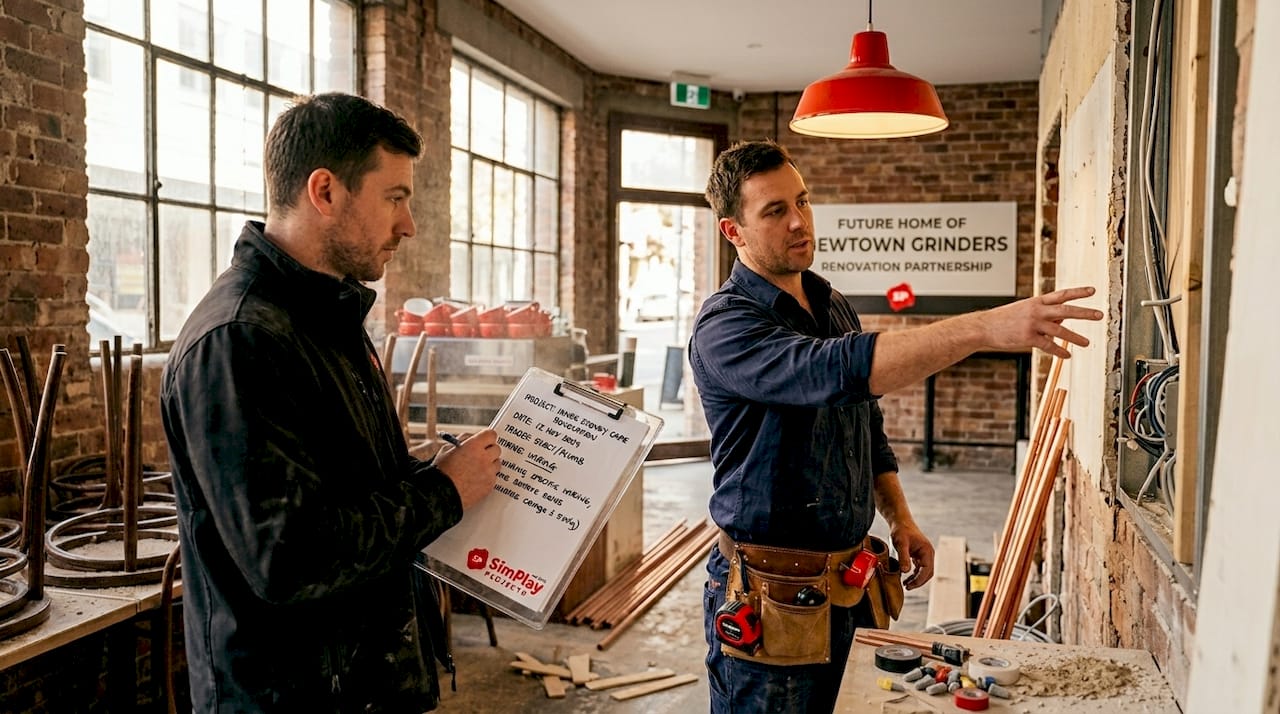
Labour is an equally significant factor. Skilled tradespeople in Sydney, including licenced electricians, plumbers, and tilers, are in short supply across the city. That scarcity drives rates up and gives trades the ability to be selective about which jobs they take. Delays in securing subcontractors push start dates back, which cascades through every subsequent trade and extends the overall project duration.
Delays and scope creep: the compounding cost problem
Schedule delays are not exceptional events. Nine out of ten construction projects experience schedule extensions, with durations blowing out by 20 to 30% on average. For most homeowners, this comes as a shock. For anyone who has worked in or around construction, it is entirely expected.
Why do delays cost so much more than people anticipate? Because time on a construction project is not free. Every extra week means:
- Extended site supervision and project management fees
- Additional builder’s insurance premiums for the extended period
- Ongoing council fees and permit extensions
- Extended construction loan interest charges
- Temporary accommodation or rental costs running longer than planned
- Subcontractor rebooking fees when trades reschedule around your extended timeline
Costs balloon in major renovations not just from rising prices but from the compounding nature of schedule slippage. A four-week delay in a Sydney renovation can easily add $15,000 to $30,000 in carrying costs alone, even if no new construction work is involved.
Scope creep is the other major culprit. 60% of construction projects experience scope changes that push costs up 10 to 15% beyond the original contract value, while also reducing on-site productivity by 10 to 30%. Scope creep rarely arrives as one large change. It tends to sneak in through small decisions that each seem reasonable in isolation: upgrading the tapware, adding a skylight, changing the tile specification after ordering.
Pro Tip: Every variation to scope should be priced and approved in writing before work proceeds. Verbal agreements on site, even with a trusted builder, create disputes and budget chaos.
Good contracts include a clear variation process with pricing mechanisms agreed upfront. If your contract does not specify how changes are priced, you are exposed to whatever rate the builder nominates at the time.
Strategies to prevent budget blowouts
Avoiding renovation cost blowouts requires front-end effort, not wishful thinking. The homeowners and developers who stay on budget consistently share a handful of habits.
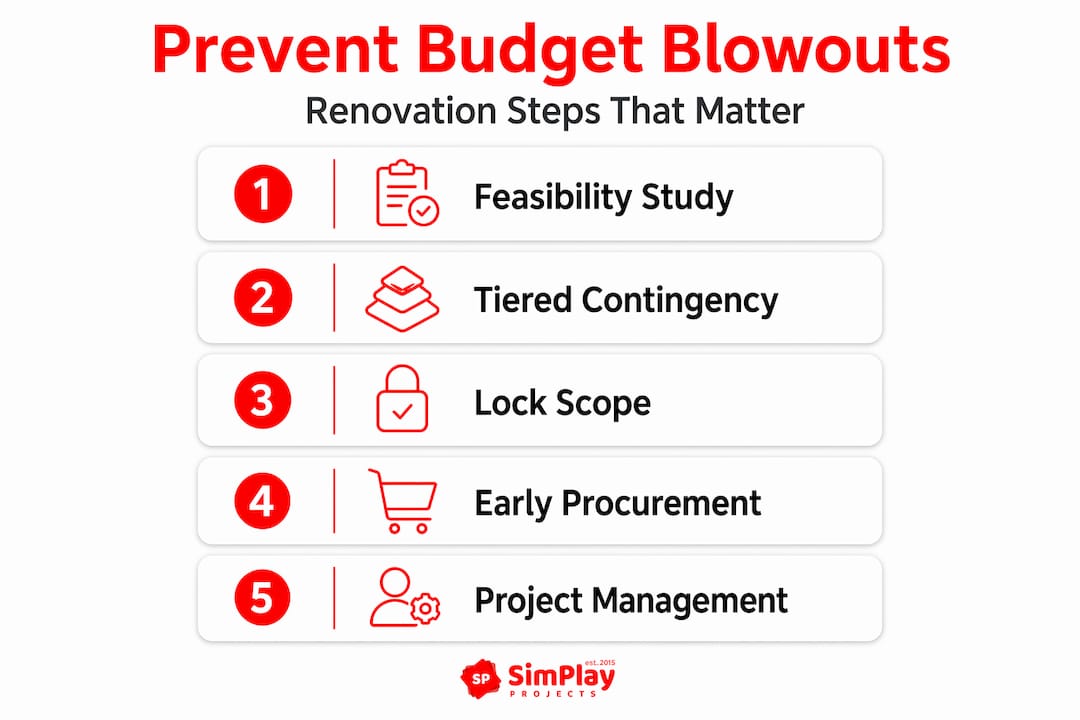
Start with a real feasibility study. Before you purchase a property for renovation or sign a builder’s contract, commission a full feasibility study that maps every cost category. This document should cover construction, holding costs, financing, taxes, professional fees, and a risk-adjusted contingency. It is not a builder’s job to produce this. It is yours, or your quantity surveyor’s.
Build a tiered contingency. A single lump-sum contingency dilutes risk management and makes it harder to track whether you are still within bounds. Tracking contingency by category gives you far better visibility and control. For most Sydney renovations, a minimum 15 to 20% contingency is the starting point. For older homes or those with unknown structural conditions, budget 25% or more.
The table below illustrates a useful way to think about contingency allocation:
| Risk category | Suggested contingency allocation |
|---|---|
| Unknown site conditions (asbestos, rot, structural) | 8 to 12% |
| Scope changes and design refinements | 5 to 7% |
| Market price escalation on materials | 3 to 5% |
| Programme delays and extended overheads | 3 to 5% |
Lock in scope before you start. Thoroughly document what is and is not included in the contract. Detailed drawings, specifications, and a schedule of finishes leave no room for ambiguity. The time you spend defining scope before construction is time you save dealing with disputes and variations during it.
Procure long-lead items early. Tiles, tapware, cabinetry, and appliances often have long lead times and unpredictable price movements. Ordering these items before construction begins eliminates one of the most common causes of delays and cost increases. A good renovation budget planning guide will outline procurement timelines as part of the overall project schedule.
Engage professional project management. Understanding the role of a project manager in renovation is not an overhead cost. On a $300,000 renovation, a good project manager typically saves far more than their fee through better subcontractor coordination, earlier issue identification, and tighter budget tracking.
My honest take on renovation budget failures
I have seen hundreds of renovation projects across Sydney, and the pattern that causes cost overruns is almost always the same. Homeowners arrive with enthusiasm and a number in their head. That number came from a friend’s renovation, a renovation television programme, or a rough builder’s estimate from a brief site walk. None of those is a budget.
What frustrates me most is that the fix is not complicated. It is just work that people do not want to do because it is less exciting than choosing tiles. Proper feasibility research, thorough scope documentation, and honest contingency planning are not glamorous, but they are the difference between a project that finishes on budget and one that causes genuine financial stress.
I have also seen the counterintuitive side of this: homeowners who obsess over getting the cheapest builder quote end up spending the most. A low quote that excludes half the cost categories is not a bargain. It is a liability. The renovation projects I have seen stay on budget almost always started with more rigour in the planning phase, not less.
The uncomfortable truth about factors driving renovation prices is that many of them are outside your control. Market conditions, material costs, and labour availability will do what they do. What you can control is how well prepared you are when they hit.
— Richie
How Simplay Projects helps you stay on budget
Simplay Projects has built its reputation in Sydney by doing the hard front-end work that most builders skip. Whether you are planning a full interior renovation, a knockdown and rebuild, or a home extension, Simplay’s team brings detailed feasibility analysis, transparent contract structures, and active project management to every job.

With deep experience managing supply chain volatility and scheduling risks across the Sydney market, Simplay Projects takes the guesswork out of budgeting. Their licenced team handles everything from structural planning through to flooring and kitchen installation, which means fewer subcontractor coordination gaps and more budget certainty for you. Visit Simplay’s showroom in Ramsgate or get in touch to discuss your project with a team that knows how to keep costs where they belong.
FAQ
Why do renovation costs blow out so often?
Most renovation cost overruns happen because homeowners mistake a builder’s quote for a total project budget. A quote covers construction; a real budget covers 15 to 20 additional cost categories including permits, financing, taxes, and professional fees.
What is a reasonable contingency for a Sydney renovation?
For most Sydney renovations, a minimum 15 to 20% contingency is recommended, rising to 25% or more for older homes where unknown site conditions are more likely.
How does scope creep affect renovation budgets?
Scope creep adds 10 to 15% to project costs on average and reduces on-site productivity significantly. It typically results from incomplete documentation and undisciplined change management during construction.
Can material prices really blow out a renovation budget?
Yes. In early 2026, construction material prices rose by 1.7% in a single month, with steel up 13.3% year over year. Procurement timing and price-lock agreements are practical ways to manage this risk.
What is the best way to avoid renovation cost blowouts?
Commission a full feasibility study before committing to any contract, document scope thoroughly, set a tiered contingency budget, and engage professional project management to track costs actively throughout the build.
Recommended
- Preparing investment property renovation: 2026 guide
- Home renovation budget planning guide for Sydney homeowners
- Budget kitchen renovation tips Australia: 2026 guide
- Profitable Home Renovations: Upgrades and Additions
Make Simplay Projects a preferred source in Google
One click tells Google to surface our articles more often in Top Stories, AI Overviews and AI Mode.